 Tilibou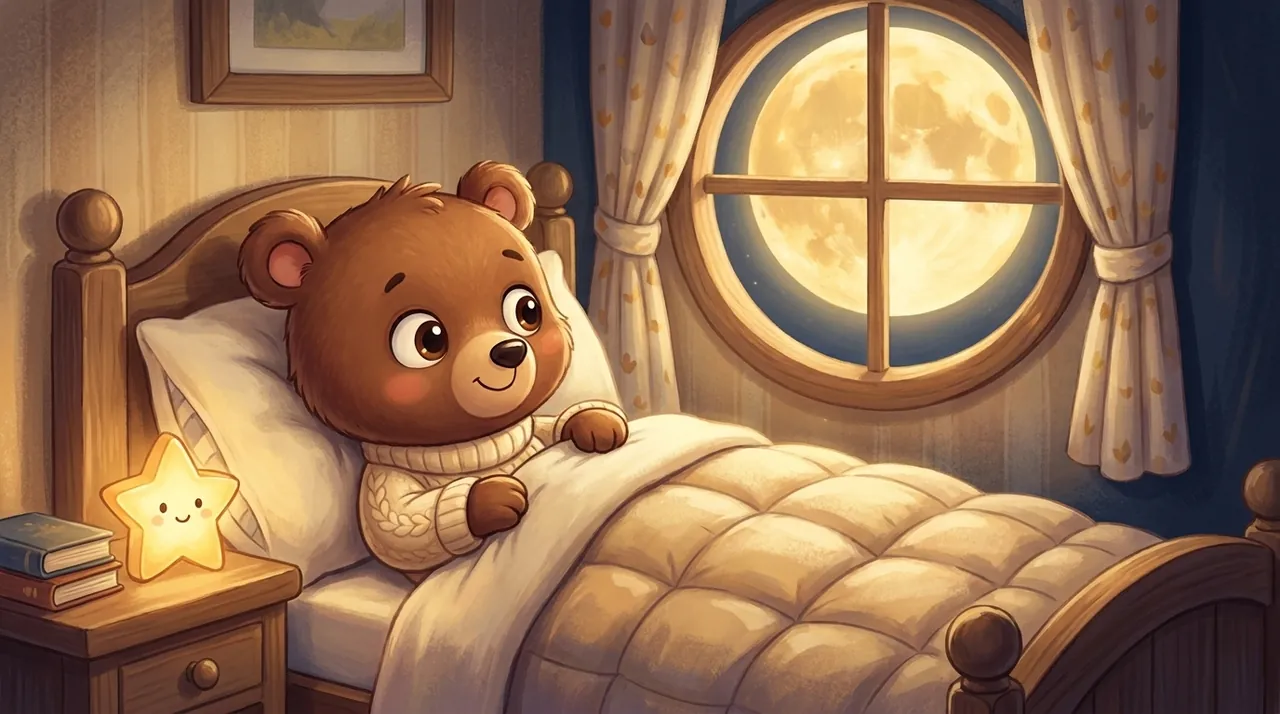
Fear of the dark: how to reassure your child
Fear of the dark is very common around ages 3 to 5, and there's nothing abnormal about it. At this age, a child struggles to tell the real from the imaginary: a shadow becomes a wolf. What helps isn't reasoning with them, but taking the fear seriously, setting up a calm routine, and leaving them a reassuring marker, like a night-light.
Why is my child afraid of the dark?
Because their imagination is running at full tilt, and they still lack a filter. Child-development experts explain it simply: a young child "does not yet tell very well what is real and what is not." In the dark, they can't see their room clearly, so they fill in the gaps. Clothes on a chair become a ghost. The rumble of the heating becomes a monster.
That's why you can't sweep the fear away with "no, there's nothing there." For them, in that moment, there is something. The ghost they say they see in their room is very real to them, experts note, so they feel genuine fear imagining it. Around age 3, the most common fears are precisely those of the dark, of monsters, and of sounds they can't identify.
Should this fear be taken seriously?
Yes, and that's actually the most important point. To overcome their fears, a child needs you to take those fears seriously and to reassure them, experts say. The idea isn't to confirm that a monster exists, but to confirm that they are afraid, which isn't the same thing.
Child-development experts even suggest a ready-made little phrase to keep in mind on difficult evenings: "I understand that this scares you and that you can't sleep. We're going to look together at how to make this fear go away." You then help them tell the difference between what's dangerous and what isn't. That sense of safety, experts add, gives them the courage they need to face and overcome their fears.
Night-light: good idea or bad idea?
More of a good idea, as long as you give the child control over it. Experts advise: set up a night-light to reassure them. There's no need to turn it on systematically; better to let your child choose whether to use it or not. A flashlight kept nearby also works very well. The child who decides whether or not to switch it on regains a little control, and that's precisely what soothes.
Health authorities point the same way: the presence of a night-light in the room can be useful to reassure a child. They add a technical caveat worth knowing, especially for the youngest: don't use an LED night-light for a baby, as it can disrupt their sleep cycles. For the exact choice of device, your pharmacist or doctor can guide you.
"The Night the Moon Disappeared"
A gentle story, screen-free, where the dark becomes a calm and friendly place. You handle the cuddle, Tilibou handles the voice.
Listen to the episodeWhich little strategies for the evening?
No need to do everything at once. Pick what speaks to your child, and stick with it for a few evenings. Here are some leads that experts recommend:
- Set up a calm routine: story, soft music, a little massage, a bath. It helps the child shed the day's tensions.
- Put them to bed at the same time every evening: "having a routine reassures your child."
- Listen to what frightens them without ridiculing it, "even if it doesn't seem founded to you."
- Leave the bedroom door ajar: "it can reassure them to hear you carry on with your activities."
- Remind them that the house is safe, and that a night-light is waiting if they need it.
One detail that matters: experts suggest avoiding, in the hour before bed, "discussions, activities, stories or games that risk exciting or worrying them." The last hour is best kept gentle.
And monster stories, should we avoid them?
Not at all, and that's good news. Asked about this, experts answer: no. Stories featuring characters that can be scary (a monster, a witch, a wolf) let children name the emotions they feel. Because tales often end well, the child identifies with the hero and "thus overcomes their fear."
Just one precaution: choose stories full of humour, and avoid telling scary ones right before sleep, "so as not to reawaken the fear." And if your child keeps asking for the same story? "It can be a sign that they're taming their fear."
The questions you may have
Should I check under the bed to reassure them?
Once, with them, why not. But experts warn: if you do it every time, you give them a reason to be afraid. Better to calmly remind them that monsters only exist in books and films, and that the house is safe.
At what age does fear of the dark go away?
It varies from child to child. Bedtime fears are mainly present around ages 3 to 5, then ease as the child grows. If the fear stays very intense, persistent and takes over the nights despite your efforts, talk to your doctor or pediatrician.
My child wants to sleep with the main light on: what should I do?
Offer a night-light or a flashlight they control themselves instead, which is gentler for sleep. The idea is to leave them a reassuring light marker, without lighting the room like broad daylight.