 Tilibou
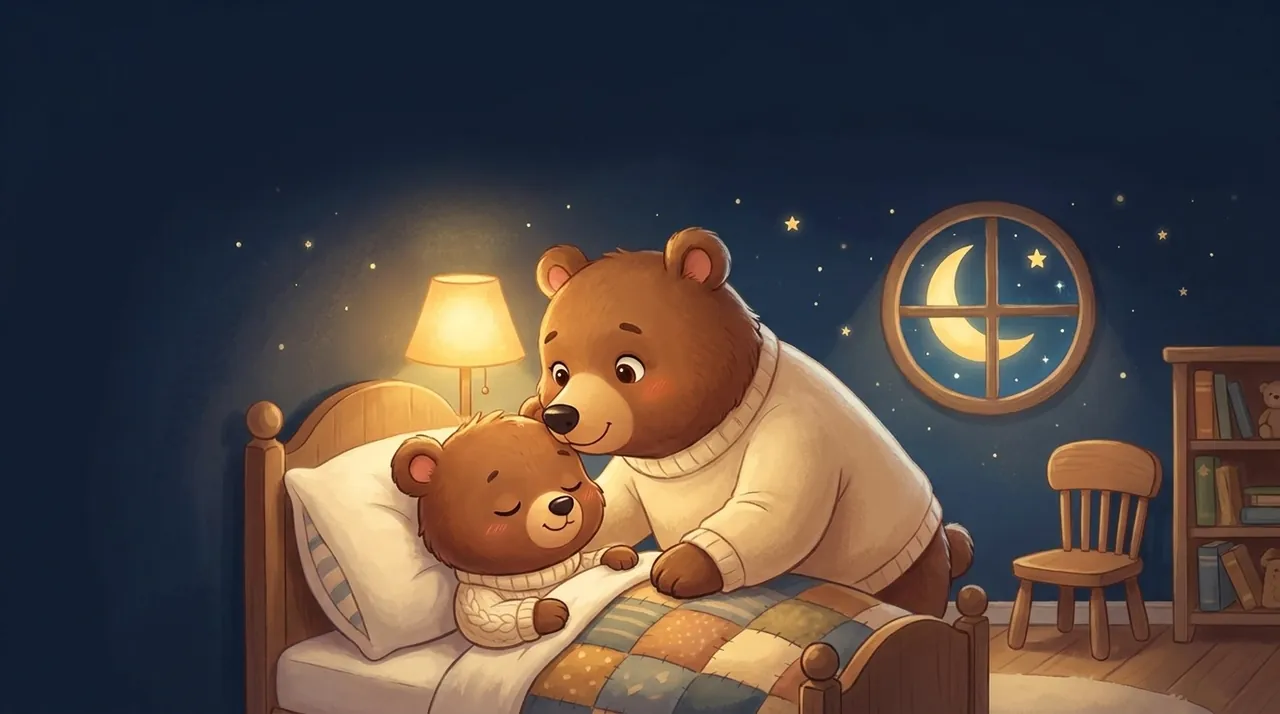
The goodnight kiss: a small ritual, a big effect
The goodnight kiss is tiny, and yet it carries real weight. It's the gesture that closes the day, that says “I'm here” and “now we sleep”. Like every step of the routine, its power comes from repetition. The same kiss, the same word, every evening: that is what reassures a child and helps them let go.
Why does a kiss reassure so much?
Because it's one of those little gestures repeated identically night after night. And it's precisely that regularity that soothes. The pediatricians of the AFPA (the French Association of Ambulatory Pediatrics) explain it for the routine as a whole: “by repeating the same gestures every evening, you create a soothing and trusting atmosphere”.
The goodnight kiss is one of those gestures. It belongs to the cuddle, which the French national health insurance (Assurance Maladie) lists among the bedtime cues: “reading a story, having a cuddle”. For the child, this tender contact marks the boundary between waking and sleep. It says: the day is over, all is calm, you can sleep.
How do you make it a real cue?
The idea isn't to over-ritualise everything, but to keep one recognisable little gesture. A few simple pointers:
- Always at the same moment: right at the end, after the story.
- Always the same gentle word, the “goodnight” that's yours.
- A kiss, then lights out. No going back once the kiss is given.
- If there's a comfort toy, include it in the kiss ritual.
What matters is predictability. The child knows the kiss comes last, and that sleep follows. This stable cue helps them calm body and mind, as Naître et grandir, a Quebec parenting reference site, describes about the bedtime routine.
“The Stolen Kiss”
A story full of tenderness around the goodnight kiss, screen-free, to ease bedtime. You do the cuddle, Tilibou takes care of the voice.
Listen to the storyAnd when the child asks for “one more”?
The old trick of one last kiss to stay up two more minutes, we all know it. The way around it is to announce the frame beforehand. The goodnight kiss is one, and it marks the end. As with stories, predictability reassures more than the extension.
Naître et grandir indeed advises warning the child when the end of the routine is coming, “when only 5 minutes are left”. The kiss then becomes the expected full stop, not an open door to fresh negotiations. A tender gesture, but a clear one.
Questions you might be asking
Is the goodnight kiss really part of the routine?
Yes. It belongs to the cuddle, which the Assurance Maladie lists among the bedtime gestures (“reading a story, having a cuddle”). And like any gesture repeated every evening, it contributes to the soothing and trusting atmosphere described by the AFPA pediatricians.
My child always asks for one last kiss?
Classic. Announce in advance that the kiss marks the end, and hold to it. The predictability of the frame reassures more than the extra kiss. Warning the child that the end of the routine is coming also helps, as Naître et grandir suggests.
Do you need a kiss if the child falls asleep listening to a story?
It's up to you, depending on your evening. The kiss can come before the story to listen to, while you're still there for the cuddle. The essential thing remains a tender, regular cue that marks the passage towards sleep.