 Tilibou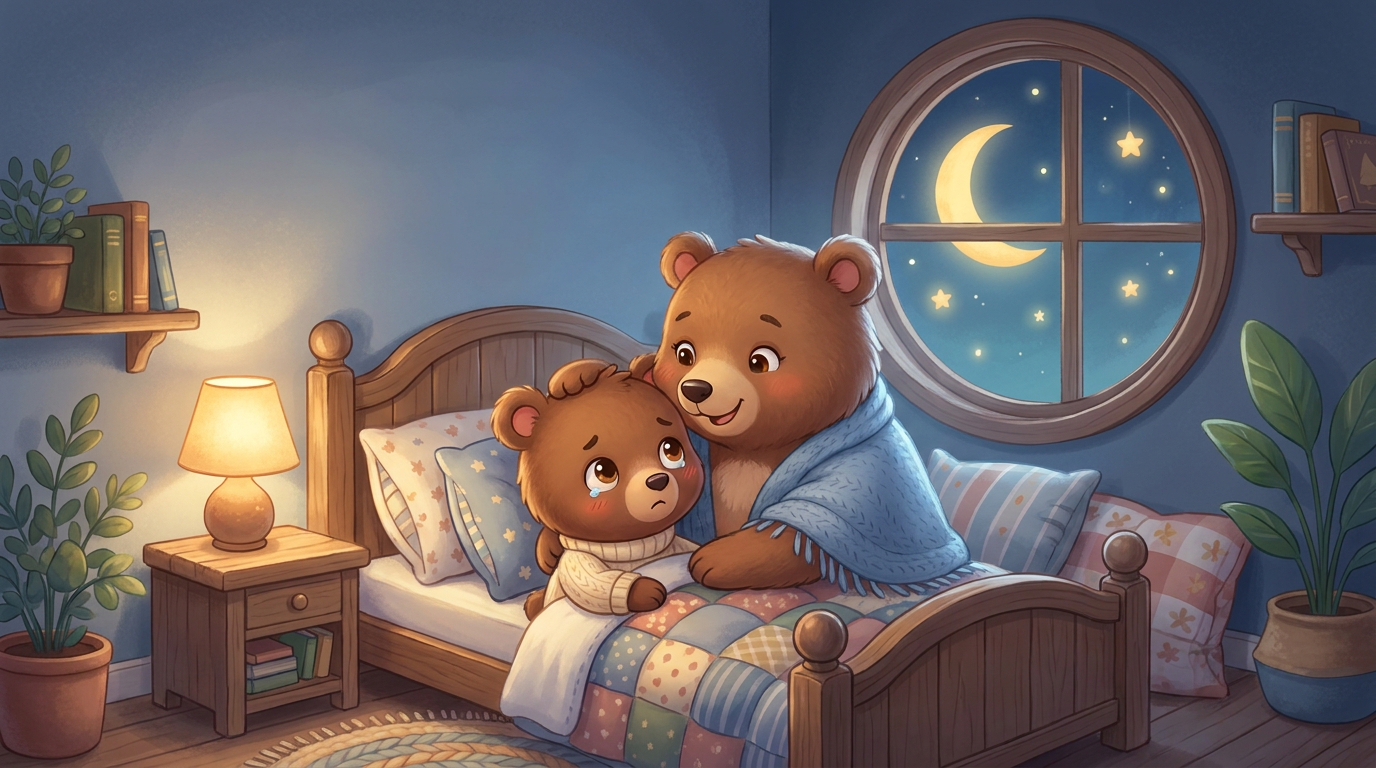
Soothing emotions at bedtime (ages 3 to 7)
In the evening, the day's emotions often rise all at once. The calm of bedtime finally makes room for what went unsaid: an anger, a fear, a big sorrow. Welcoming that emotion rather than hushing it, putting a word to it, then coming gently back to calm, is often what unties the evening. And a story helps to clear this hurdle softly.
Why do emotions spill over in the evening?
You've surely noticed: everything was fine, and the moment the lights go out, here come the tears or the meltdown. It's not a tantrum. A little one's day is dense, full of discoveries and effort. Experts note, about sleep for ages 3 to 5, that after a day full of discoveries, your child needs to find their bearings again. In the evening, the body slows, the guard drops, and what was held in all day finally finds a way out.
Anger, fear, sadness aren't problems to fix. They're normal emotions. Experts put it plainly: like joy and sadness, anger is a completely natural and healthy emotion. Your role in the evening isn't to make them vanish. It's to help your child move through them, then set things down before sleep.
Welcome the emotion before trying to calm it
The reflex, when we're tired too, is to reason quickly. Except a child who's overwhelmed barely hears a thing. Experts suggest first welcoming your child's emotions without judgement and, if they're very agitated or crying a lot, comforting them, giving a cuddle and waiting for them to calm down before asking what's going on.
In practice: get down to their level, stay calm, wait for the wave to pass. Take their emotions seriously, tell them that what they feel is normal, experts add. A child who feels heard feels safe. And a child who feels safe settles faster than one who's rushed.
Put a word to what's happening in the tummy
This is the heart of what helps, and it's also the whole angle of our stories. Helping a child name what they feel gives them a handle on it. Experts suggest starting by naming the emotions you observe in them, such as joy, sadness, anger and fear. You can even name what the body is doing: "your fists were clenched," "do you feel a knot in your tummy?" Putting words to it is already the start of soothing.
Stories are a ready-made way in for this. Experts recommend looking at books with your child to show them characters who go through emotions, because certain stories can help them tame, in a playful way, emotions like anger, sadness or fear. A character who's scared, who gets angry, who cries and then is comforted: the child recognises themselves in it, and it's less daunting seen from the outside.
"The knot in the tummy"
A gentle story that puts words to the emotion that tightens the tummy in the evening. Just the thing to ease the way back to calm, screen-free. The cuddle is yours.
Listen to the episodeShould you talk about worries right before sleep?
Not quite at lights-out. Bedtime is better kept calm, and stirring up a big worry right before sleep can wake it up. Experts say it clearly: don't discuss their anxieties or worries just before bed. And what follows is precious: instead, give them all the time they need to tell you what's troubling them during the day.
In other words, the right moment for the big conversations is earlier. At bedtime, you welcome what spills over, you reassure, you set down a word, and you slip toward something gentle. The story plays exactly this role of transition: it shifts the register and takes the child elsewhere.
Coming back to calm, step by step
When the emotion has passed, here's a simple template for settling the evening:
- Welcome first, without judging: a cuddle, a calm presence, the time for the wave to subside.
- Put a word to the emotion: "you were angry," "you were hurting." The child feels understood.
- Breathe together, gently, if it helps them release the body.
- Move on to the usual routine: soft light, a story, the comfort object.
- One last reassuring word, always the same: "I'm here, see you tomorrow." Predictability soothes.
Nothing dramatic, once again. It's the regularity of these gestures, evening after evening, that reassures most. Experts sum it up well: a reassuring routine, repeated evening after evening, helps maintain or restore good habits. Health authorities point the same way and list reading a story and sharing a cuddle among the gestures that mark bedtime. The routine acts as a thread: it brings things back to calm, and the story takes over from the emotion.
The questions you're asking
My child gets angry or cries mostly at bedtime, is that normal?
Yes, it's very common. In the evening, after a full day, held-in emotions rise. Anger, like sadness, is, experts note, a natural and healthy emotion. What matters is welcoming what your child is going through, putting a word to it, then coming back to calm before sleep.
How can I help my child calm down in the evening?
Stay calm yourself, welcome their emotion without judging it, and name it ("you're angry," "you're hurting"). Experts also suggest offering ways to soothe when the child is calm, such as breathing. Then move on to the usual routine: soft light, a story, a cuddle.
Can a story really help with emotions?
It does help, yes. Experts recommend showing a child characters who go through emotions, because certain stories help them tame anger, sadness or fear. The story sets the emotion at a distance and gives the child words for it. It's not a treatment, it's an everyday support.