 Tilibou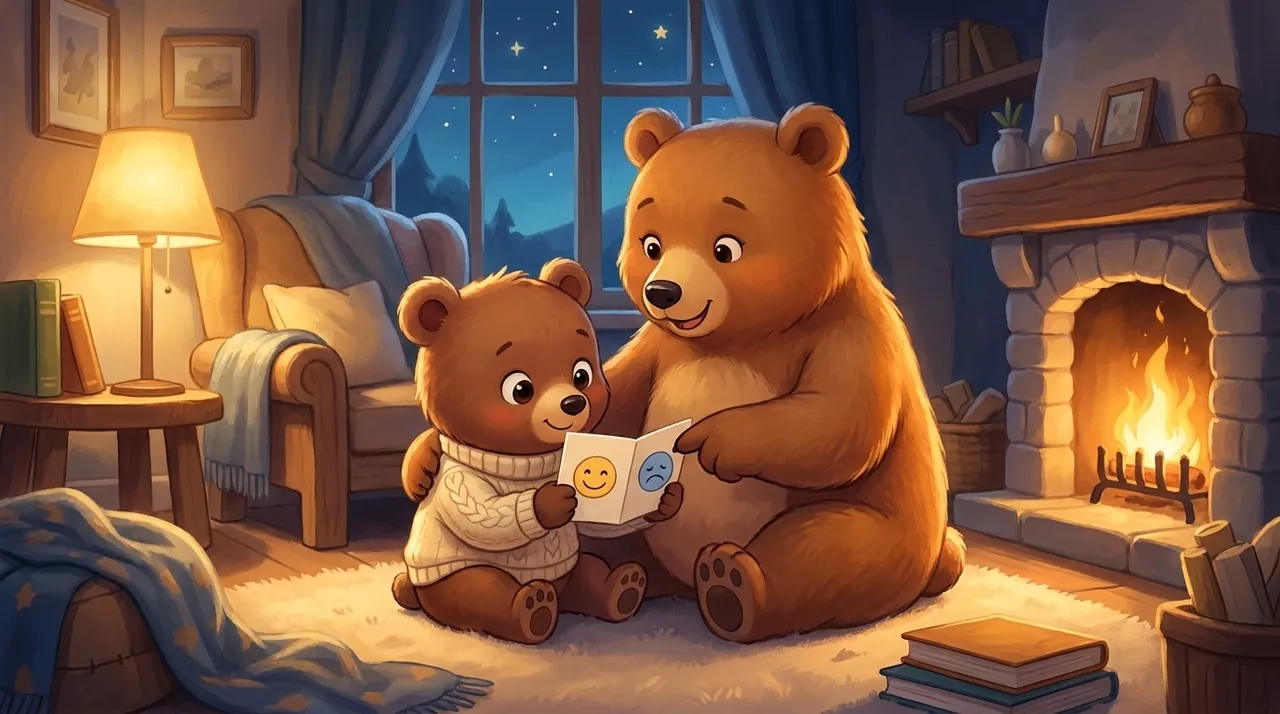
Helping your child name their emotions (ages 3-7)
Putting a word to what we feel is something we learn. A child aged 3 to 7 lives through powerful emotions without always knowing how to name them, and that is often what spills over into shouting or tears. You can help, quite simply: by naming the emotion for them at first, by spotting the signs in their body, and by going through stories where characters feel the same things they do.
Why does a child struggle to say what they feel?
Because it is complicated, even for us. From the very start it is a challenge: it is not easy for a young child to understand what they are feeling. They are sometimes overwhelmed by their emotions and unable to control them. A little one does not yet have the words, or the perspective, to make sense of what is happening inside. The emotion arrives, enormous, and comes out however it can.
Helping them name it is not asking them to calm down. It is giving them a handle on what is moving through them. When an emotion has a name, it already feels a little less frightening.
Naming the emotion for them, to begin with
The first step is the simplest, and it is the one you take. Child-development guidance suggests starting by naming the emotions you observe in them, such as joy, sadness, anger and fear. In practice, that means very plain sentences: "You're crying, are you sad because mummy is leaving?"
No need to overdo it. You observe, you put a word to it, you check. The child hears that what they are going through has a name, that they are understood, and that it is okay to feel this way. Taking their emotions seriously helps a child feel reassured, understood and comforted. As they grow, you can name finer emotions such as disappointment, guilt and jealousy.
Spotting what happens in the body
An emotion is felt before it is spoken. The tummy that tightens, the clenched fists, the heart that beats fast. Teaching a child to spot these signs gives them an alarm signal of their very own. You can name these physical signs: "You were shouting and your fists were clenched when you saw your sister knock down your block tower. Were you angry?"
That "tummy ache of worry" is something many children know well. Naming it already makes it less overwhelming. And it is a landmark the child will be able to use on their own, later, to understand that an emotion is rising.
"The lump in my tummy"
A gentle story where the emotion that grips the tummy finally finds a name. Perfect for helping your child put words to what they feel, screen-free.
Listen to the episodeStories, a doorway into emotions
This is where storytelling becomes a real everyday tool. A character who gets angry, who is afraid, who cries and then is comforted: the child watches from the outside, and it helps them recognise their own emotions. Looking at books with your child to show them characters who experience emotions is widely recommended, because some stories can help them tame emotions such as anger, sadness or fear in a playful way.
Play works very well too. You can have fun in front of a mirror imitating different emotions, or play with puppets and figurines. The idea is always the same: give the child a playground where the emotion is lived without risk, and where it eventually gets a name.
A few simple phrases to support them
If you are looking for where to start, here are some concrete footholds:
- Name what you see: "You're angry," "You look sad." Without interpreting, just observing.
- Link the emotion to the body: "Do you feel a lump in your tummy? Are your fists clenched?"
- Validate: "It's okay to feel that. I'm here."
- Talk about your own emotions too, simply. The child learns that we all have the right to have them.
- In the evening, let a story do the rest: a character who feels the same thing, and the emotion settles more gently.
A reassuring word before we finish: it takes time. You name today, you name again tomorrow, and one day the child does it on their own. It is repetition, not performance, that counts.
The questions you are asking
From what age can a child name their emotions?
It builds up gradually, and every child moves at their own pace. At first, it is the parent who names the emotion for them. Around age 3, a child begins to recognise basic emotions (joy, sadness, anger, fear), then more complex emotions as they grow. The important thing is to support them, not to rush them.
What should I do if my child refuses to talk about what they feel?
You don't force it. A child who is very angry or very worked up is not in a state to talk: it is better to comfort them and wait until they calm down. Play, drawing, or a story where a character lives through the same emotion are gentler paths than a direct conversation.
Do stories really help children recognise emotions?
Yes, it is a well-recognised path. Showing a child characters who experience emotions helps them, because the story helps them tame anger, sadness or fear in a playful way. The child sees themselves in the character and more easily puts a word to what they are going through.