 Tilibou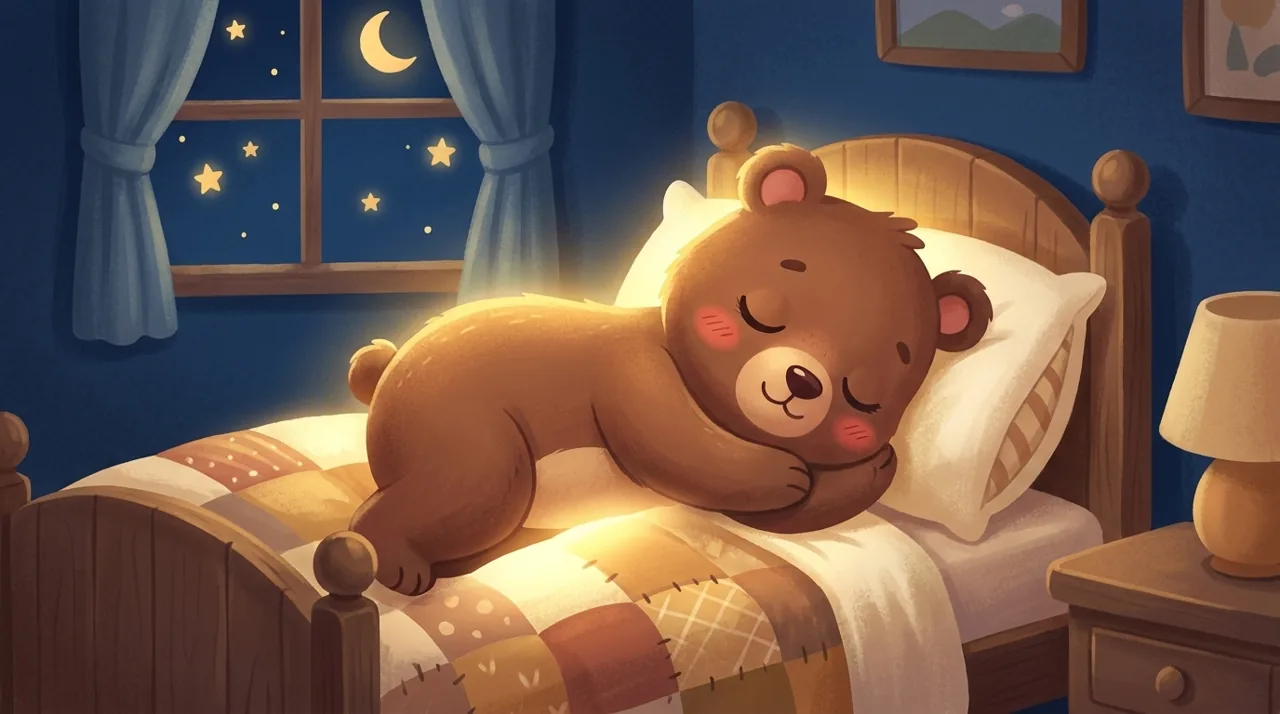
Why do we need to sleep? (explained simply)
“Why do I have to go to sleep?” It's a real question, and it deserves better than a “because it's time.” For a child, sleep feels like a forced pause in the middle of everything that's exciting. Explaining to them why the body and the head need this pause, with gentle, vivid words, helps them accept it a little more willingly. No need for big speeches: a few well-chosen images are enough.
Why does the body need to sleep?
The simplest image is that of the pause. By day, the body runs, jumps, climbs, explores. In the evening, it's tired, like a little car that's been driving all day. Sleeping is the moment when it settles down and rests, peacefully, to recover its energy.
You can extend the comparison to things the child knows well. A phone you recharge at night, a plant that closes up in the evening, a cat that stretches after its nap: everything around us alternates times of activity and times of rest. Sleep is our way of recharging the batteries, to set off in great shape the next day.
And there's an idea children love: sleep helps us grow, while we sleep without realizing it. France's national health insurance, the Assurance Maladie, points out that sleep plays a part in producing growth hormone. Telling them that sleeping is also how we get bigger suddenly gives bedtime a little air of a secret mission. It's no longer a constraint, it's a quiet job the body does all by itself, in the calm.
And the head, what does it do during sleep?
The head also makes the most of the night to rest, in its own way. During the day, the child sees, hears and learns an enormous amount of things. In the evening, all of that makes a lovely jumble in their head. Sleep is a bit like the moment when we tidy up that jumble, gently.
An image that works well: the head is like a bedroom where we played a lot during the day. At night, we put the memories back in their place, we keep the prettiest ones, and at waking, everything is clearer and tidier. That's why we often feel better in the morning, and why a night's sleep helps us see things more calmly.
Sleep also helps us feel good in our emotions: according to the Assurance Maladie, it helps regulate them. When we've slept well, we're often more patient, more cheerful, less quickly annoyed. When we've lacked sleep, we cry over nothing and everything seems harder. Children live this very concretely, and pointing it out to them (“remember how everything was complicated yesterday evening when you were tired?”) helps them understand, from the inside, what rest is for.
“The Fire Station Falls Asleep”
Tonight in Bellecolline, nothing happens, and that is just fine: Nino the firefighter's station is simply getting ready for bed. A calm story to end the day gently. You handle the cuddle, Tilibou handles the voice.
Listen to the storyHow to respond when the child doesn't want to sleep?
Often, it's not sleep the child refuses, but the idea of leaving the day. They're afraid of missing something, or they'd like the moment with you to last a little longer. Welcoming this feeling, rather than arguing, already defuses much of the resistance.
You can then present sleep not as an end, but as a lovely interlude. Remind them that while they sleep, their body grows and their head tidies away its treasures, and that tomorrow awaits them with new things to discover. Bedtime becomes a bridge to the next day, not a deprivation of the present.
A regular ritual helps enormously to get through this gently. The Quebec parenting site Naître et grandir points out that “the hour before bedtime should unfold calmly.” A few gestures repeated each evening, always in the same order, tell the body that the time for rest is near. The child no longer has to fight against a decision: they follow a path they know, one that leads them peacefully toward sleep.
A few words and images to talk about it tonight
No need for a lecture on sleep. A few vivid sentences, slipped in at the right moment, leave a far stronger impression. Here are some simple phrasings to draw on depending on the evening's mood:
- “Your body worked hard today, now it's allowed to rest.”
- “It's at night that you grow, while you sleep nice and warm.”
- “Your head is going to tidy away all the lovely moments of the day.”
- “Tomorrow, you'll wake up full of energy to play.”
- “We say good night, and we meet again tomorrow morning.”
These little sentences have an advantage: they turn an instruction into a reassuring story. The child no longer goes to bed because they're ordered to, but because they've understood, in their own way, that sleeping does them good. And that's often where the evening resistance begins to melt.
Questions you might have
How do I explain sleep without scaring?
By staying with positive, gentle images: rest, recharging energy, the memories we tidy away. We avoid anxiety-inducing explanations and highlight the reassuring side: the body grows and rests, and tomorrow arrives with new things to live.
My child says they're not tired, what do I say?
You can welcome their words without entering a debate, then lean on the ritual rather than on the argument. The calm gestures repeated each evening gently prepare the body. Naître et grandir indeed points out that the hour before bed is better spent calmly.
Why do we say we grow while sleeping?
It's an image children love, and there's some truth in it: according to the Assurance Maladie, sleep plays a part in producing growth hormone. All of this happens while we sleep, without us noticing. Presenting bedtime this way gives it a positive, concrete meaning, far from a simple constraint.