 Tilibou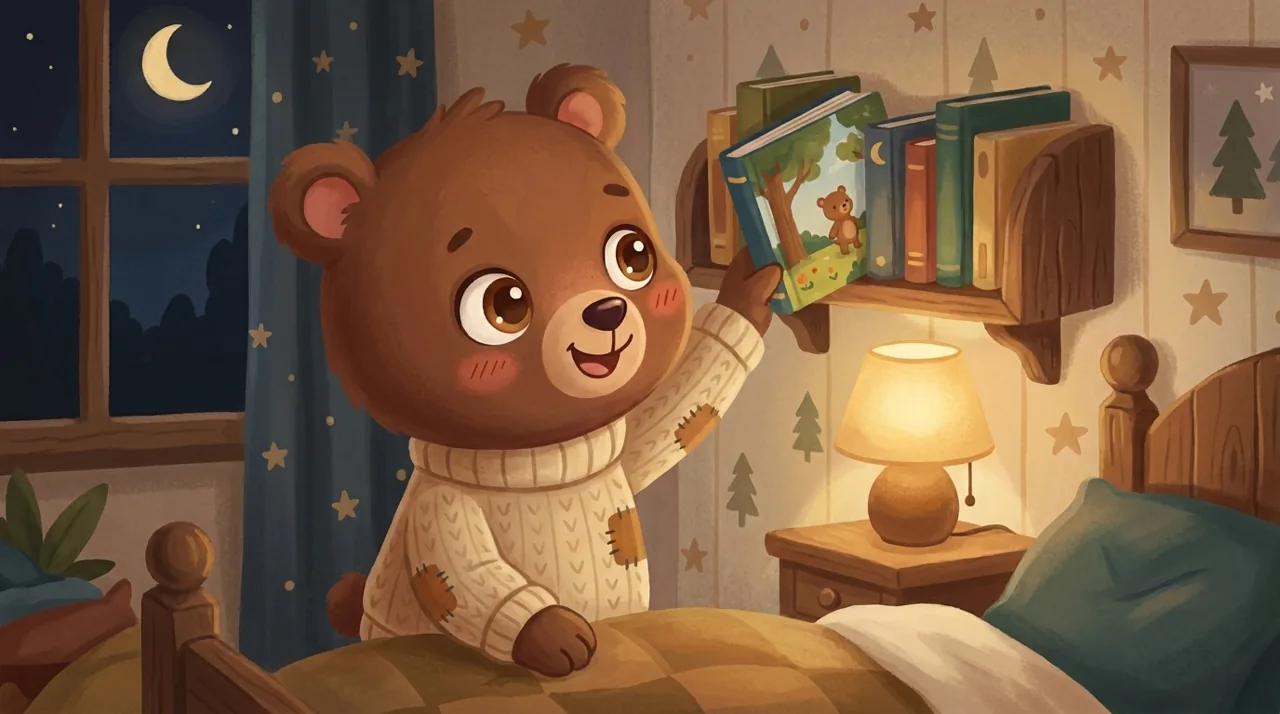
Letting Them Choose Their Bedtime Story
"I'm the one who chooses!" We've all heard that little evening cry. And often we hesitate: if we let them choose, aren't we giving them too much power? The answer hinges on one distinction. Choosing the story isn't commanding bedtime. It's stepping into the routine through the front door, with the feeling of having a place there. And that changes a great deal about the mood of the ten minutes that follow.
Why this small choice matters so much
At 3, 4, or 5, a child spends a large part of the day on the receiving end of decisions that aren't theirs. We dress them, we feed them, we take them places, we bring them back. Bedtime often arrives as the day's last constraint: time to go, end of story. Letting them choose the story slips them a decision of their own, right at that moment. A tiny one, but a real one.
You feel the effect right away. A child who has chosen their story settles in differently. They're no longer there because they're made to be, they're there because they decided to be. The routine becomes a little bit theirs. And a child who feels like an actor in their own bedtime resists far less than one who endures it.
There's also the question of belonging. The evening routine is a moment for two, sometimes three. When a child takes part in the choice, they don't just receive a story: they help build the moment. That's exactly what a routine is about: by repeating the same gestures every evening, you create a soothing, reassuring atmosphere. Choosing the story can be one of those repeated gestures, the one that belongs to the child.
Choosing isn't deciding everything
This is where many parents get stuck, and it's understandable. The fear is that "choosing the story" becomes "choosing the time," then "choosing not to sleep." Yet the distinction is simple to hold: you offer a choice within a frame, not a choice over the frame itself.
In other words, bedtime stays non-negotiable. The time, the number of stories, switching off at the end: that's what you set. But within that frame, the child has room to manoeuvre. Which story tonight? The rabbit one or the whale one? This page or the next one? The choice is about the content, never about the rules.
This distinction protects everyone. The child gets the heady feeling of deciding, and you keep hold of what really matters. It echoes a useful pointer about the pace of bedtime: keep control of the time anyway, since children tend to want to put off the moment of switching off the light. Choosing the story shouldn't become an escape hatch for buying time.
Tilibou stories
A catalogue of short, gentle bedtime stories, screen-free. Your child scrolls through, spots their favourite, presses play themselves: the choice becomes a gesture of the routine, and you keep the cuddle.
Listen to an episodeHow to frame the choice without getting bogged down
Letting them choose, yes, but not into the void. A child told "choose whatever you want" in front of a whole bookshelf can go round in circles for ten minutes, and the routine collapses before it even begins. A few simple reflexes keep the choice alive without letting it overflow:
- Offer two or three stories, not the whole shelf. A choice between options ends quickly; an unlimited choice drags on.
- Announce the rule before, not during: "Tonight, you choose one story from these three."
- If they hesitate too much, choose for them with a smile. The goal is calm, not a feat of decision-making.
- Accept the repeats. Wanting the same story ten nights running is normal and even reassuring for them.
- Keep the choice in its place in the sequence: choose, then read, then switch off. The same order every evening.
The repeats deserve a pause, because they often throw parents. A child who always asks for the same story isn't short on imagination: they're seeking the familiar. A routine draws its very strength from repetition. The bedtime routine helps your child gradually calm their body and mind. A familiar story, chosen and re-chosen, is part of that calming. Let them ask for it as often as they need.
An audio story lends itself well to this little choosing ritual. The child scrolls through the titles, recognises the pictures, points to the one they want. The choice becomes concrete, quick, and it has a fixed length: when the story ends, the moment to switch off arrives on its own. No haggling over "one more page."
When the choice turns into a tug-of-war
Sometimes the choice goes off the rails. The child refuses every option, asks for another, then changes their mind. It isn't necessarily about sleep: bedtime is often when the day's tiredness comes out. On those evenings, there's no point arguing at length. You restate the frame in a calm voice, you make the call, and you move on to reading. Quiet firmness reassures more than a long discussion.
And if the tug-of-war comes back every evening, it may be saying something other than a tantrum: a need for closeness, a day that was too packed, too abrupt a transition between the bustle and bed. The hour before bedtime should unfold calmly. A story choice set within an already soothing atmosphere almost always goes more smoothly than a choice thrown out in the thick of excitement.
Questions you may be asking
Doesn't letting them choose the story give the child too much power?
No, as long as you separate the content from the frame. Bedtime, the time, and the number of stories stay decided by you. The child only chooses which story, within that frame. That little bit of power makes them an actor in the routine without calling the rules into question.
My child always wants the same story, should I push for variety?
No need to force variety. Asking for the same story is normal and reassuring behaviour: the child seeks the familiar, and repetition is part of what soothes at bedtime. Let them re-choose it as often as they like; the urge for something new will come back on its own.
From what age can they choose their bedtime story?
As soon as they can show a preference, often around 2 or 3. At first, offer two options and let them point. As they grow, they'll choose more easily and more quickly. The point isn't their exact age, but offering them a real little decision within a frame that stays yours.