 Tilibou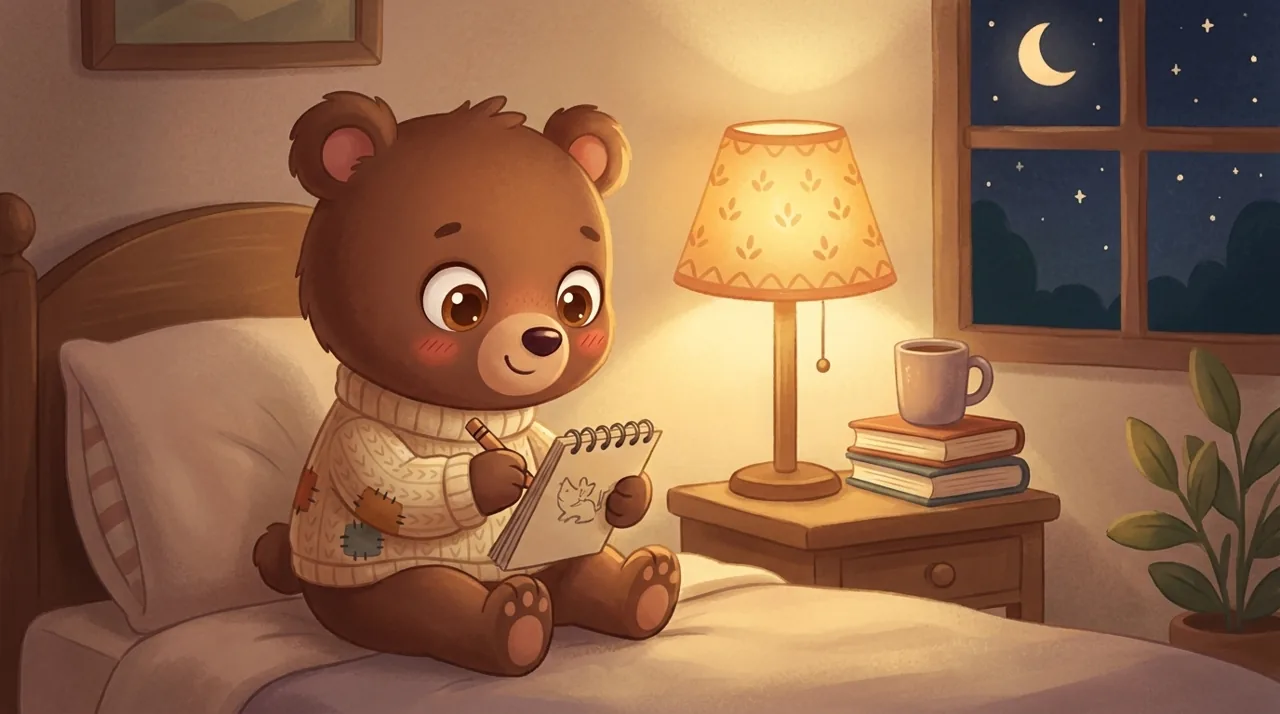
Drawing the day to set it down before night
On some evenings, your child's head is still full. The squabble at recess, the outing that thrilled them, the thing they didn't dare say. A pencil, a sheet, five minutes: drawing the day gives them somewhere to set it down. Not to make a masterpiece, just to lighten the load a little before switching off the light.
Why drawing helps empty the head in the evening
At 3, 5 or 6, a child doesn't always know how to put words to what went through them. They've lived through plenty, and at bedtime, all of it comes back in a jumble: the excitement, the frustration, the little sorrow from the afternoon. Drawing offers another way out. They don't need to tell, they show. And often, while making marks, they start talking on their own.
This moment also has the merit of being calm. Health authorities point out the value of a little ritual that marks bedtime, and mention "reading a story, having a cuddle." A quiet drawing belongs to the same family: a settled activity, shared, that slows the pace. And the hour before bedtime should unfold quietly. Getting out the pencils goes exactly in that direction, as long as you make it a gentle moment and not a workshop.
How to set up the ritual, step by step
The goal isn't to produce a beautiful drawing, but to open a little airlock between the day and the bed. Here's a simple frame, to adapt to your child:
- Keep a sheet and three or four pencils within reach, always in the same spot.
- Ask an open question: "What stood out for you today?" or "Draw me your favourite moment."
- Let them do it their way. A scribble counts as much as a detailed figure.
- Listen without correcting. If they comment, you follow. If they go quiet, the silence is fine too.
- Put the drawing away together: keep it in a notebook, tear it up, set it on the table. They decide.
Five minutes are enough. Repeating the same gestures matters: as child-health specialists note, by repeating the same gestures every evening, you create a soothing and confident atmosphere. Getting out the pencils at the same time, in the same place, quickly becomes a marker your child looks forward to.
Tilibou stories
Once the day is set down on the sheet, it's time for the story. Short, gentle bedtime tales, screen-free, to glide toward sleep. You do the cuddle, Tilibou handles the voice.
Listen to an episodeTurning a big emotion into a little drawing
The evening drawing isn't just a logbook. It's also a way to give shape to what weighs. A child who was scared can draw the monster, then lock it in a cage or give it a red nose. An anger can become a big black cloud that you then crumple up. Putting the emotion on the sheet is starting to look at it from the outside, and so to make it smaller.
You don't need to interpret or analyse. Your role is to be there, to welcome the drawing without judgement and to name it gently: "Ah, that one looked angry." Often, that's enough for your child to let go and move on to something else. If a strong emotion comes back evening after evening, it's better to talk to a professional than to try to fix everything with a pencil.
The evenings when there's no time
This ritual should never become one more chore to squeeze in. On some evenings, you come home late, your child is dropping with tiredness, and it's perfectly fine to skip the drawing. The idea isn't to make it a daily obligation, but to have a tool on hand when you feel their head is too full to fall asleep peacefully.
And when the drawing has done its job, following with a calm story naturally extends the descent toward sleep. The sheet is put away, the light dims, the voice takes over. The whole thing fits into a short ritual, and that's often what works best.
The questions you may be asking
From what age can you do the evening drawing?
As soon as your child holds a pencil and enjoys scribbling, often around 3. At this age, don't look for a recognisable drawing: it's marks, colours, a gesture. What matters is the shared moment, not the result. Around 5 or 6, your child often tells more while drawing.
Should I analyse what my child draws?
No. Your role is to welcome, not to interpret. You can name what you see with simple words and let them comment if they feel like it. No need to look for hidden messages. If a drawing really worries you or if a strong emotion comes back every evening, talk to your doctor or pediatrician.
Does drawing replace the bedtime story?
They complement rather than replace each other. Drawing helps set down the day and settle into calm; the story extends the transition toward sleep. Many families do both: you draw for a few minutes, you put it away, then you listen to or read a story before switching off.