 Tilibou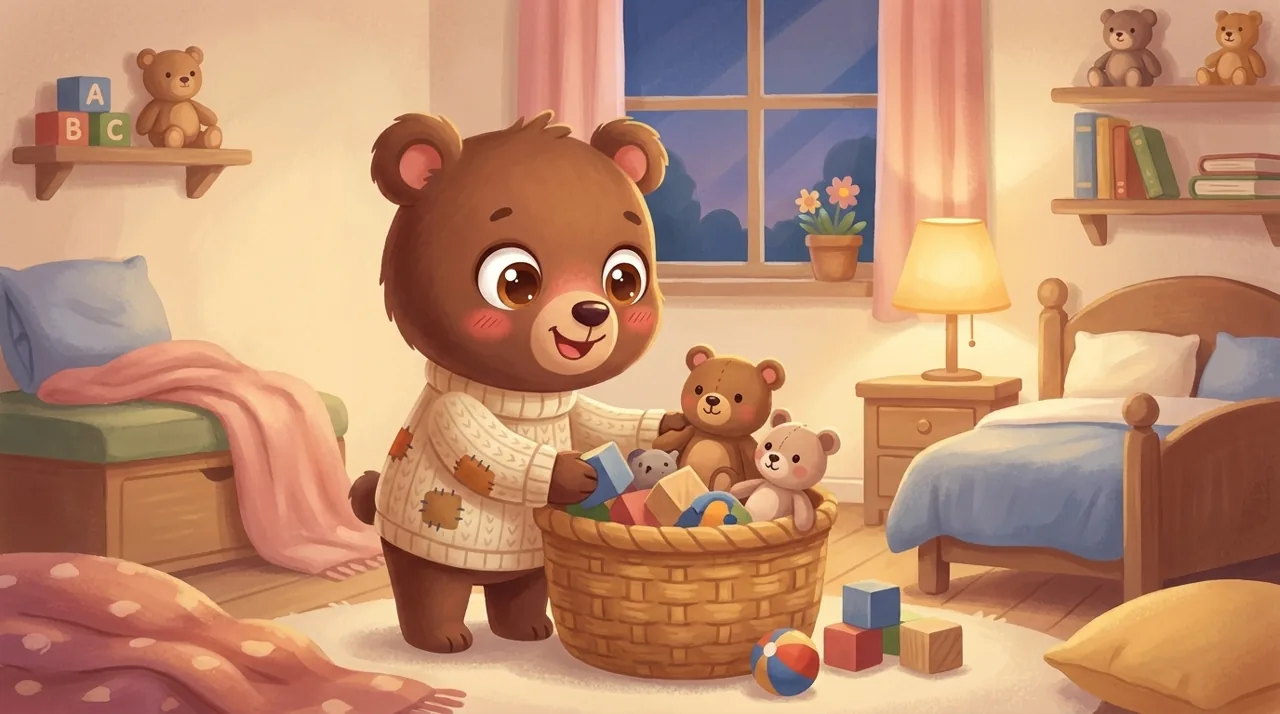
Tidying Up Toys Without the Shouting: Turn It Into a Game
“Tidy up your toys!” Three words, and it's often a meltdown. Yet tidying up can become a light, even companionable moment, as long as you turn it into a game rather than an order. A little song, the shop game, bins where everything goes away in two moves: you go from chaos to calm without raising your voice. And in the evening, this routine becomes a lovely transition toward the story and sleep.
Why tidying isn't so simple for them
For a child, a floor strewn with toys is no problem at all: it's a playground. Asking them to put everything away at once is asking them to stop something enjoyable for a task that, in their eyes, holds no interest. Hence the resistance. The key is to start early and to help. Naître et grandir, a Quebec parenting reference site, points it out: “as soon as your child can get around, you can start teaching them to tidy their toys”, but “at first, your child will need your help”.
In other words, tidying is learned, like getting dressed or setting the table. It isn't innate, and it isn't a matter of obedience. It's a skill that builds, move by move, with a parent alongside rather than a parent giving orders from the sofa.
Turn tidying into a game
The best antidote to shouting is play. And here, Naître et grandir offers a ready-made idea: “Turn tasks into games.” To get your child to tidy their room, the site suggests, for example, asking them if they want to play shop. You put the toys on the shelves as if you were stocking the aisles of a store. Suddenly it's no longer a chore, it's a role.
Other games work just as well, depending on the evening's mood:
- The tidy-up song. Always sing the same little tune while you tidy, and try to finish before the song ends. The music sets the tempo and makes the task joyful.
- Sorting by colour. “You take the reds, I'll take the blues!” Tidying becomes a sorting game, and it goes twice as fast with two of you.
- The pick-up countdown. “Can we tidy everything lying around before I count to twenty?” The countdown turns the task into a mini-challenge.
Play doesn't excuse the tidying: it makes tidying doable and even fun. And it sends a precious message, that you can take care of your things without it being a punishment.
Simple bins, goals their size
Complicated storage discourages everyone. The simpler it is, the more a child can do it alone. Naître et grandir stresses it: “using baskets or bins makes tidying toys simple and quick.” No need to sort everything by category: one big bin where the blocks go, another for the soft toys, and there you have it.
You also aim for goals at their level. Asking them to tidy the whole room at once is a guaranteed mountain. Tidying one bin, then another, is a string of small victories. Giving them tasks “within their abilities”, as Naître et grandir encourages, is what lets a child succeed: “they feel grown-up and useful, which helps build their confidence”. You tidy less to have a clean room than for what it teaches them.
“The Royal Sardine in the Storm”
Moustache the octopus can only find three of his sixteen socks. With Tom the Pirate, he sets off to solve the greatest mystery of the sea: where do lost socks go? You handle the cuddle, Tilibou handles the voice.
Listen to the storyTidying, a transition toward calm
In the evening, tidying up toys has one more virtue: it marks the end of play and the start of winding down. It's a signal for the body as much as the mind. Naître et grandir also points out that “the hour before bedtime should unfold calmly”. Tidying together, without agitation, gently prepares that soothing climate a child needs in order to fall asleep.
So the idea isn't to add a stressful chore right before sleep, but to set up a reassuring transition: you tidy, you dim the lights, you put on pyjamas, you read a story. A predictable sequence that says, step after step, that night is approaching. Tidying becomes the first step toward the evening's cocoon.
A few reflexes to tidy without shouting
To keep this moment light rather than tense, a few simple supports:
- Tidy with them, especially at first. Naître et grandir points out that between 2 and 3, your child “still needs your help to tidy their toys”.
- Break it into small goals: one bin at a time, not the whole room at once.
- Rely on simple bins and baskets, for tidying that's “simple and quick.”
- Slip in some play: the shop, the song, sorting by colour.
- Praise the taking part, even imperfect. Naître et grandir advises: “praise and thank your little one when they take part in chores, even if the result isn't perfect”.
As the evenings go by, tidying will become a reflex more than a battle. And you'll discover that those few minutes spent sorting blocks together, singing, are far more than housework: they're a small shared moment, just before snuggling up for the story.
Questions you may be asking
At what age can a child tidy their toys?
Very early, as long as they're helped. Naître et grandir says that as soon as a child can get around, you can start teaching them to tidy their toys, helping them at first. Independence comes later, gradually: you do less and less for them, and more and more with them, until they manage on their own.
How can I get them to tidy without it turning into a conflict?
By turning the task into a game and aiming small. Naître et grandir suggests, for instance, offering to “play shop”, and using bins for tidying that's simple and quick. Breaking it into small goals, tidying together, and praising the taking part, even imperfect, defuses most tugs-of-war.
Why tidy in the evening specifically?
Because it helps move from play to calm. Naître et grandir points out that the hour before bedtime should unfold calmly. Tidying up toys then becomes a gentle transition: you close the day of play and open the evening routine, toward pyjamas, the story, and sleep.