 Tilibou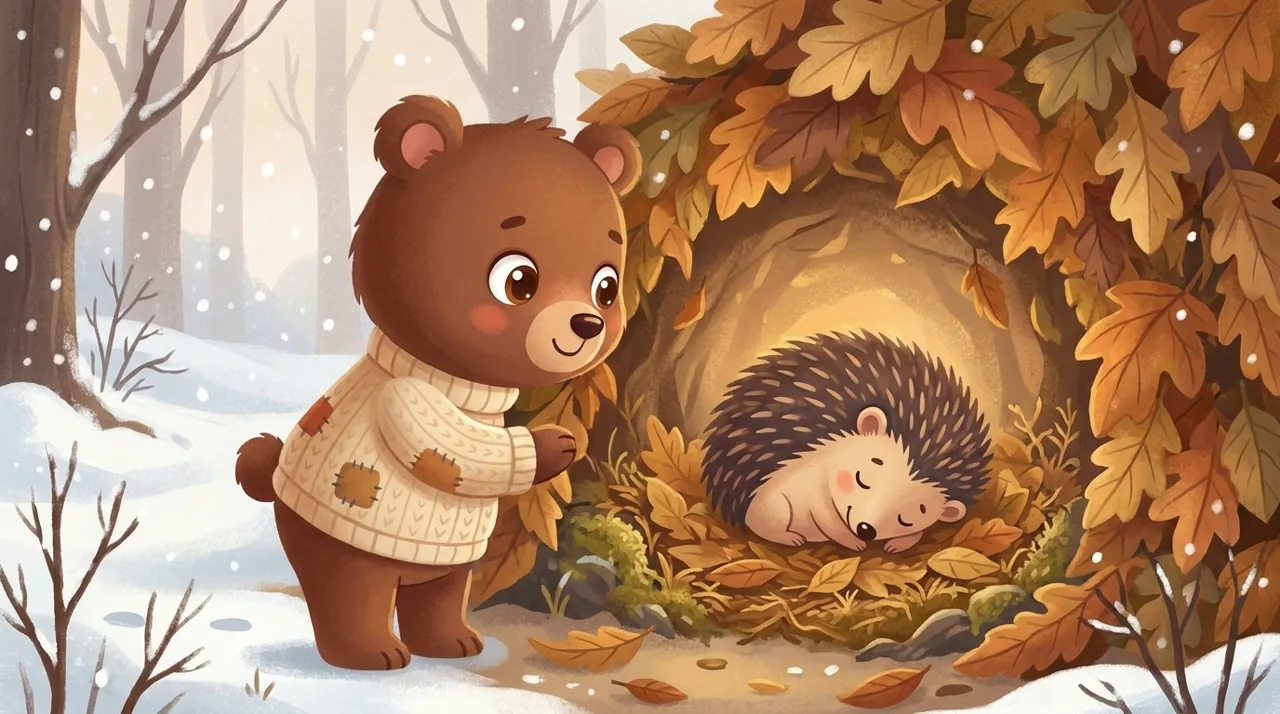
Why do some animals sleep all winter?
"The bear, does it sleep all winter? For real?" Yes, and it's one of those bedtime questions that make eyes light up. The marmot, the hedgehog, the frog: several animals spend the bad season in a great sleep. Telling them why is to offer a lovely true story. And it's also a beautiful doorway to calm, because talking about the sleep of animals gently leads back to their own.
What is hibernating?
Hibernating means sleeping deeply all winter long, or nearly. When the cold arrives and food becomes scarce, some animals can no longer find anything to eat outside. Rather than fighting against the cold and hunger, they have a surprising solution: they fall asleep and wait for the return of spring.
During this great winter nap, their body runs in slow motion. The heart beats very gently, the breathing calms down, and the animal needs only very little energy to hold on. It's a bit like a night light turned down to the minimum: the little light stays on, but it barely uses anything. The animal isn't in danger, it's simply on pause.
To hold on all winter without eating, these animals prepare for autumn with care. They feast during the fine days to build up reserves, the way you'd fill a big pantry before a long journey. These reserves serve as provisions throughout their sleep, until the sun comes back to warm the earth.
Which animals sleep all winter?
Children often already know a few, and it's a chance to enrich the list with fun images. Each has its hiding place and its very own way of spending winter snug and warm:
- The marmot snuggles deep in its burrow, as a family, well sheltered under the ground.
- The hedgehog rolls into a ball in a nest of dead leaves, spines facing out.
- The frog hides in the mud at the bottom of the water or under damp leaves.
- The bat hangs upside down in a dark, quiet cave.
- The dormouse, a little cousin of the mouse, falls so fast asleep it almost looks like a soft toy.
And the bear, the star of every story? It too spends the winter in its den, in a great sleep. Scientists explain that its rest is a little different from that of the others, but for a child, the image of the bear sleeping warm while snow falls outside is perfect. No need to go further: it's reassuring and it feeds the imagination.
Tilibou stories
Short, gentle bedtime stories, screen-free, peopled with animals and seasons. Enough to dream a little before closing the eyes, snug and warm like a hedgehog in its nest.
Listen to an episodeHibernation and sleep: what's the link with bedtime?
Here's the loveliest bridge to make with your child. Like the animal settling into its cosy hiding place for the winter's night, the child joins their warm bed for the night. Both are looking for the same thing: a safe, comfortable place where the body can rest peacefully.
The difference can be told with a smile: the animal sleeps a whole winter in one go, while we do a little hibernation every night. We hide under the duvet like the marmot under the ground, we close our eyes, and in the morning we come back out in great shape, ready to play. Presenting bedtime this way makes it less of a constraint and downright poetic.
This kind of image rests well on a regular, soothed bedtime. Parenting specialists point out that "the hour before bedtime should unfold calmly." Telling the story of the animals falling asleep, in the warmth of the bedroom and the gentle voice of the evening, is part of those gestures that slow everything down beautifully. The child drifts toward sleep thinking of the hedgehog curled into a ball, and that's a very lovely last image before sleeping.
How to make it a moment of sharing in the evening?
This question of winter animals is a treasure to explore together, without needing to know everything. The aim isn't to recite a lesson, but to marvel as a pair, and to extend curiosity all the way to sleep.
You can invent what comes next: imagine what the marmot dreams of, what it will do when it wakes in spring, or the animals' party when the sun comes back. You can also make the link with what the child knows: "You too are nice and warm, like the hedgehog in its leaves." And if a question is beyond you, it's the perfect chance for a "we'll look it up tomorrow," which already opens curiosity for the next day. What matters is that shared moment, calm and close, that accompanies the child toward the night.
Questions you might have
Which animals really hibernate?
Among the best known: the marmot, the hedgehog, the dormouse, the bat, or the frog that spends winter sheltered. The bear too spends winter in a great sleep deep in its den. Each has its hiding place and its way of getting through the cold season warm.
Why do animals hibernate?
Mostly because of the cold and the lack of food in winter. Rather than searching for food in a harsh environment, these animals slow their body down and live on the reserves built up in autumn, while waiting for the return of spring and food.
Is it like our night's sleep?
It's a lovely comparison to make with a child, even if it's not quite the same. The animal sleeps all winter in one stretch, while we sleep each night then wake in the morning. In both cases, the body looks for a safe, warm place to rest.