 Tilibou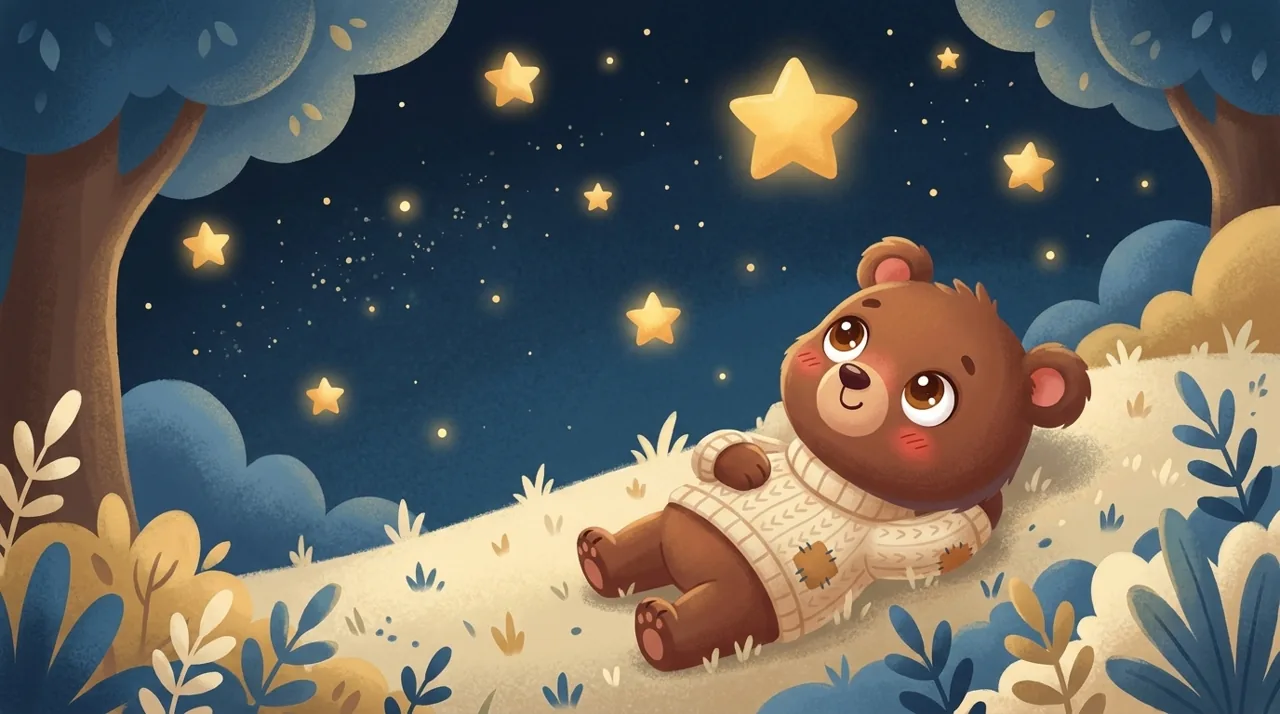
Where do the stars we see at night come from?
"Where do the stars come from? And why do they show up in the evening?" Good news: you don't need to be an astronomer to answer. The stars are there all the time, they're huge suns very, very far from us. We only see them at night, when the sky turns dark. Plenty to feed a lovely moment of wonder just before bedtime.
A big question for a little curious mind
When night falls and the first bright dots appear, many children look up and ask where they come from. It's one of those end-of-day questions worth pausing on. It speaks of curiosity, of the wish to understand the world, and it opens a lovely space for low-voiced conversation, perfect for bedtime.
You don't need to know everything, or to recite a lesson. What matters is answering with simple, true words, and leaving a little room for dreaming. A star is as much to be looked at as it is to be explained.
The simple explanation: they're very distant suns
Here's the sentence to keep in mind: every little star we see twinkling is in fact a sun. A huge sun, sometimes much bigger than ours, but so far from us that it looks like nothing more than a tiny point of light. Our own sun is simply the star that happens to be very close. The others are so distant that their light takes a very long time to reach us.
For a child, you can sum it up like this: "Stars are giant suns, but super far away. Up close, they'd shine very brightly, like ours. From far away, they look like little lights." It's accurate, and it's more than enough to spark wonder. If your child asks why they flicker, you can add that their light passes through the air moving above us, and that makes them twinkle like candles in the wind.
Tilibou stories
Gentle bedtime stories to travel among the stars, screen-free, to ease into falling asleep. You give the cuddle, Tilibou takes care of the voice.
Listen to an episodeWhy do we only see them at night?
This is often the second question, and it's very logical. The stars are there in broad daylight too, but we can't make them out. The reason is simple: by day, the sky is flooded with the light of our sun, which is very close and very powerful. That great brightness erases the small distant lights of the other stars, exactly like a candle becomes invisible when you switch on a big ceiling light.
In the evening, when our sun disappears below the horizon, the sky gradually darkens. And then the stars become visible again, one by one. They haven't "arrived": they were just waiting for the light to dim so they could show themselves. It's a lovely image to share with a child: the stars hide during the day and come to keep us company at night.
You may notice that we see far more of them in the countryside than in the city. Here again, the explanation is simple and speaks to a little one: in cities, the streetlights, the shop windows and the lit-up windows brighten the sky all night, and that light erases the faintest stars, a bit like the sun does during the day. Far from the lights, the sky is truly black, and the stars appear by the hundreds. If you go away one evening on holiday or to the countryside, it's a lovely gift to offer your child: to look up and discover a sky they couldn't see at home.
Turning the stars into a gentle bedtime ritual
Watching the sky before sleep can become a little appointment of your own. A glance through the window to look for the first star, a whispered "good night," then you draw the curtains and head to bed. This kind of calm, repeated gesture is part of what helps the child ease into the evening gently, and the hour before bedtime is always better spent calmly.
Once under the covers, the stars remain a wonderful companion for daydreaming. You can imagine joining the dots into pictures, wonder whether someone is keeping watch up there, or simply let yourself be lulled by a story about sky and night. It's exactly the kind of still, screen-free journey that helps drift gently toward sleep.
Questions you might have
Where do the stars come from, in simple words?
Every star is a huge sun, very, very far from us. Our sun is the closest star. The others are so distant that we see nothing more than tiny points of light. You can sum it up for a child like this: "Stars are giant suns, but super far away."
Why do we only see the stars in the evening?
Because by day, the light of our sun is so strong that it masks the small distant lights of the stars, like a candle becomes invisible under a big ceiling light. In the evening, when the sky darkens, the stars become visible again. They were there all along, they were just waiting for the dark.
Does watching the stars help with getting ready for bed?
It's a lovely moment to slow down. Looking for a star through the window, screen-free, invites calm before bed. Parenting specialists point out that the hour before bedtime is better spent gently. A look at the sky, then a story in bed, and the evening settles peacefully.