 Tilibou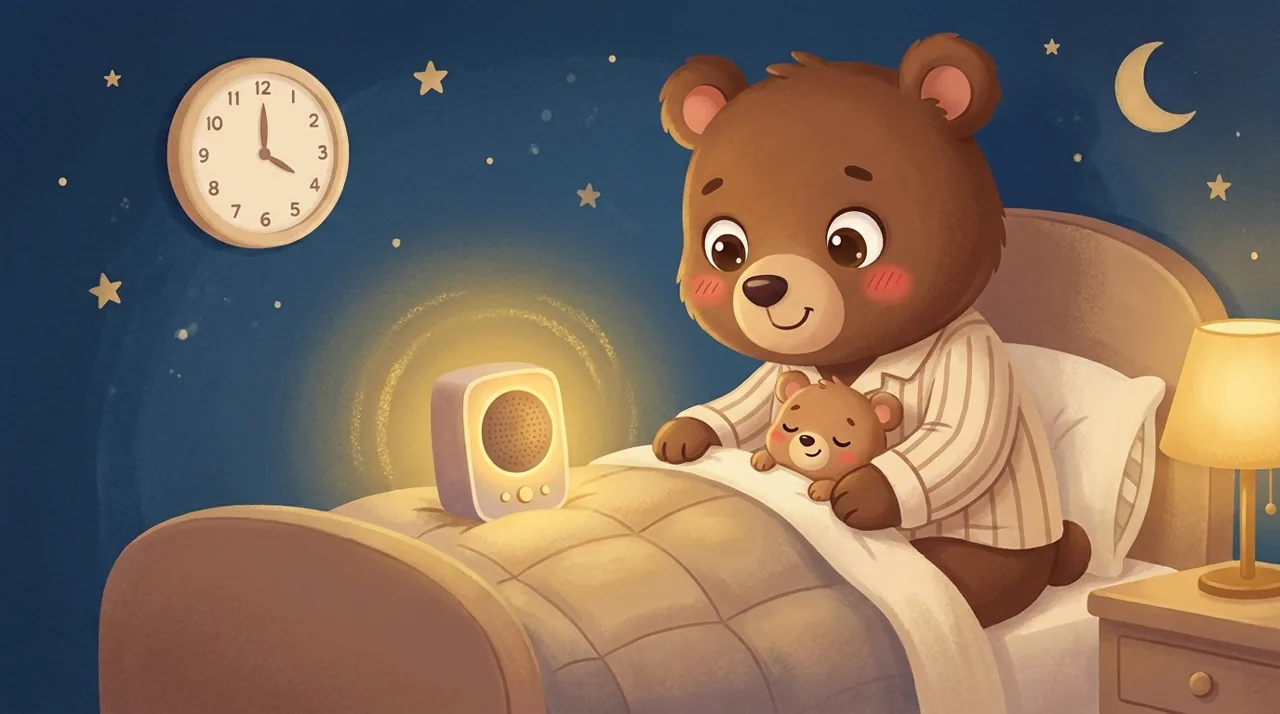
The bedtime story when you are short on time
Some evenings, you have nothing left. The day was long, dinner dragged on, and the idea of reading a whole story makes you want to cry. Good news: you can keep this moment without carrying it at arm's length every time. Audio can take over, and no, that is not cheating. Here is how to hold on to the evening ritual on the days when time is short, without the guilt.
What matters is the landmark, not the performance
We sometimes imagine that a “real” bedtime story means twenty minutes of reading aloud, with the voices and the sound effects. That is lovely when you can. But that is not what makes the ritual. What soothes a child is the regularity of the moment, not its length or the quality of the delivery.
mpedia.fr, written by the paediatricians of the AFPA (the French Association of Ambulatory Paediatrics), says it clearly: “by repeating the same gestures every evening, you create a soothing and trusting atmosphere.” What matters is that the gesture comes back. A short story, a story you listen to, a story told quickly: as long as it marks the passage toward sleep, it does its job. A rushed evening is still an evening with a ritual.
In other words: aim for the landmark, not the performance. The child is not grading your delivery. They need to know that, like every evening, story time has come.
Audio as a relay: the voice carries on without wearing you out
On the evenings with no energy left, an audio story makes a real difference. You start it playing, the child settles in, and the voice takes over while you recover for two minutes. It is not about replacing you: it is about holding the ritual another way.
And a storytelling voice works, even when you are not the one reading. mpedia.fr puts it nicely: “tell a story (even if the content is not grasped, the musicality of language does its job).” The language, the rhythm, the softness of a steady voice: all of it works for the child, whether it comes from you or from a recording. Audio keeps that musicality intact.
The other benefit is screens. On the evenings when you are tempted to put on a video “to keep them quiet,” audio offers an alternative that keeps things calm. Health authorities recommend at least an hour without screens before bedtime: a sound story lets you respect that time, lights off, without a tablet. The World Health Organization also values “storytelling” as a quality, screen-free activity. The audio relay ticks that box.
“The Fire Station Falls Asleep”
Tonight in Bellecolline, nothing happens, and that is just fine: Nino the firefighter's station is simply getting ready for bed. A calm story to end the day gently. You handle the cuddle, Tilibou handles the voice.
Listen to the storyStaying present another way (even in two minutes)
The fear, when you hand the story over to audio, is “skipping” the moment of connection. But presence does not mean reading. You can be there, truly there, without holding the book. A few gestures are enough to keep the connection, even on a clock-watching evening:
- Start the story together, snuggled against your child for the beginning.
- Put a hand on their back, or let them rest their head: the contact matters more than the words.
- Stay for the length of a short story, then the kiss and the ritual phrase, always the same.
- If you have to leave before the end, say so: “I'm letting the story finish, I'm right next door.”
Those two or three minutes of presence are worth more than a long reading done reluctantly, with the dishes on your mind. The child feels the attention far more than the number of pages. Naître et grandir, a Quebec parenting reference site, reminds us that “the hour before bedtime should unfold calmly”: a settled parent for two minutes is worth more than a rushed parent for ten.
Letting go of the guilt (it is a gift for the child too)
Let us say it plainly: handing the story over to audio on a tired evening does not make you a bad parent. Guilt, here, serves no purpose. An exhausted parent who forces themselves to do everything every evening ends up tense, and the child picks up on that tension. Naître et grandir even warns: “do not be in too much of a hurry to finish the routine, because your child will feel your haste.”
Accepting the relay means protecting the mood of bedtime. You keep some energy, the moment stays gentle, and the ritual holds over time, which matters far more than the occasional perfect evening. On the evenings you can do everything, do it with pleasure. On the others, audio is there. Both are real bedtime stories.
The questions you are asking
Is it a problem not to read the story myself every evening?
No. What soothes a child is the regularity of the ritual, not the fact that you read every night. An audio story keeps the musicality of the voice, which works even when you are not the one telling it. What matters is a calm moment and a landmark that comes back.
How do I stay close to my child if I just press play on audio?
Presence does not run only through reading. A few minutes snuggled against them at the start, a resting hand, the kiss and the ritual phrase are enough to keep the bond. Contact and attention count more than the number of pages read.
Can audio really replace reading on busy evenings?
It does not replace shared reading, it takes over when you are short on time. Both have their place. In the evening, audio also lets you keep a calm, screen-free moment, which health authorities recommend before bedtime.