 Tilibou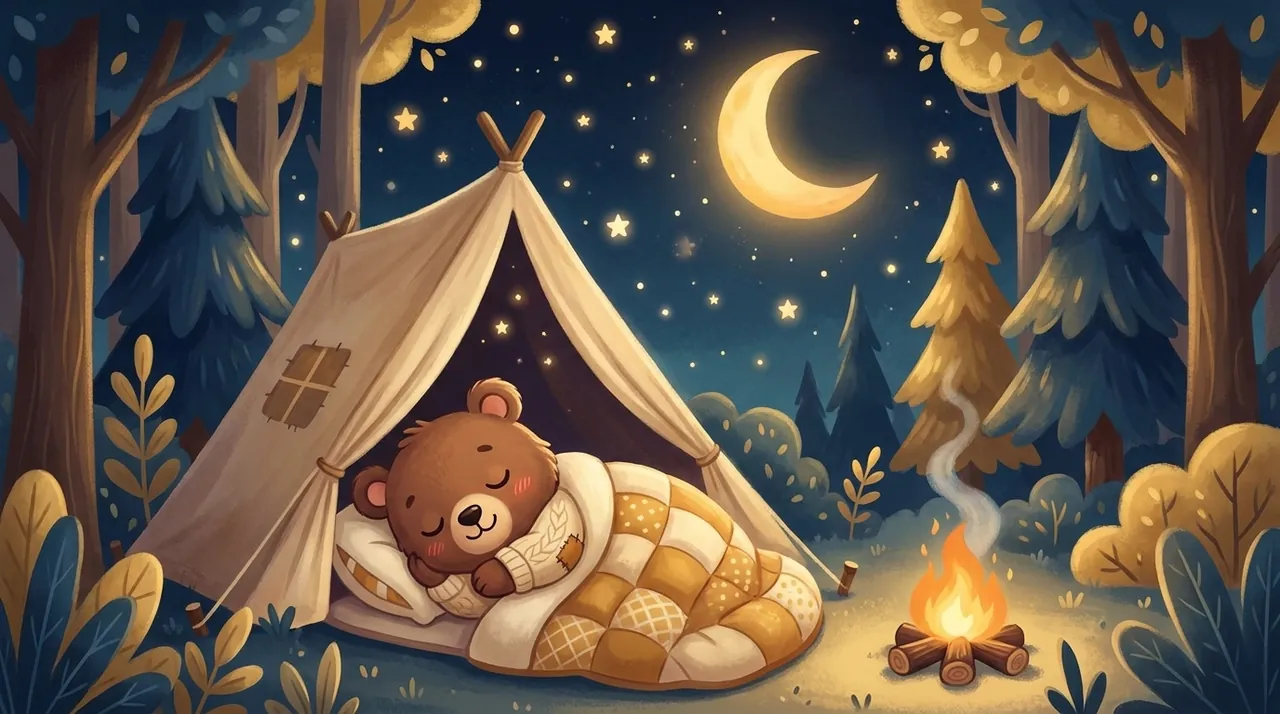
Sleeping under the stars: taming the sounds of the night
First night in a tent or under the stars: everything is new, and the night outdoors has sounds of its own. An owl, the wind in the leaves, a creak you can't place. What reassures your child is preparing this night as a joyful moment, packing their anchors, and bringing back the evening ritual, even beneath the stars.
Why is a night outdoors so impressive?
Because everything changes all at once. The bed, the walls, the light, the smells. And then those sounds you never hear in the bedroom. Yet it's exactly this kind of sound that unsettles at this age. Child-development specialists note it: around 3, the most common fears are of the dark, of monsters, and of noises the child can't recognize.
In the dark, imagination takes over. A child can't yet clearly tell the difference between what's real and what isn't, specialists explain. If they hear a noise they don't recognize, they may imagine it's a monster growling. An owl then becomes an unsettling character, the wind a mysterious breath. Nothing abnormal about that: it's a child's brain doing its job.
Preparing the night outdoors like a lovely adventure
A first night elsewhere is something you prepare for, and that changes everything. For nights spent away from home, child-development specialists advise talking about it a day or two in advance and presenting it as a positive event. A night under the tent isn't the scary unknown: it's an expedition, a campsite, a cabin of stars.
The other key is the anchors. Specialists suggest packing things that remind them of home, like their comfort toy or favorite stuffed animal, and even a sheet from home or their usual night light. A familiar smell, a known object, and the campsite becomes a little like their room. If your child needs to feel in control, let them choose what to bring.
"A night under the stars"
A gentle, screen-free story where the sounds of the night become friends of the campsite. You handle the cuddle, Tilibou takes care of the voice.
Listen to the episodePutting words to the sounds outside
This is often the most effective thing you can do. A named noise is less frightening than a mysterious one. Calmly explaining where the owl's call comes from, the rustle of leaves, the babble of a stream, helps the child file these sounds under the known. The principle, according to child-development specialists, is to help them tell the difference between their imagination and reality.
And don't skip the groundwork: your child needs you to take their fears seriously and to reassure them. Taking it seriously isn't validating the monster, it's welcoming the emotion. You can turn it into a game: listen together, guess who makes which sound, count the stars. The night outdoors then becomes something you explore together rather than something you endure.
Carrying the evening ritual over, even under the tent
The secret to a good night outdoors comes down to one word: continuity. Your child will be reassured to recognize their routine, child-development specialists note, and to understand that bedtime is near. So you keep the same gestures, simply moved beneath the stars:
- The same steps as at home, in the same order: pajamas, a quick wash, then settling in.
- The comfort toy, the stuffed animal, the sheet that smells of home, within reach in the sleeping bag.
- A flashlight or night light the child keeps and switches on if they need to, for a little control.
- A story, read or listened to, snuggled up together before lights out.
Health authorities place reading a story, having a cuddle, listening to soft music or a song among the gestures that mark bedtime. Under the tent as in the bedroom, a gentle story can also cover the noises outside and bring the child's attention back to something reassuring. Your calm presence, for its part, is worth more than any speech.
The questions you may be asking
From what age can you have your child sleep outdoors?
There's no ideal age. Child-development specialists invite you to trust above all your child's temperament and your own judgment: some children adapt quickly, others need more time. Starting with short separations or a night in the garden, near the house, helps you ease into it.
My child is scared of noises at night while camping, what should I do?
Name the sounds calmly to help them, according to child-development specialists, tell the difference between their imagination and reality: the owl, the wind, the stream. Keep a night light within reach and the usual evening ritual. If the fear is very intense or persistent, you can talk to a professional.
Can an audio story help with sleep under the tent?
Yes, a gentle story is part of a soothing ritual and can help draw attention away from the noises outside. It accompanies bedtime, but replaces neither your presence nor, in the case of very strong fear, the advice of a professional.